
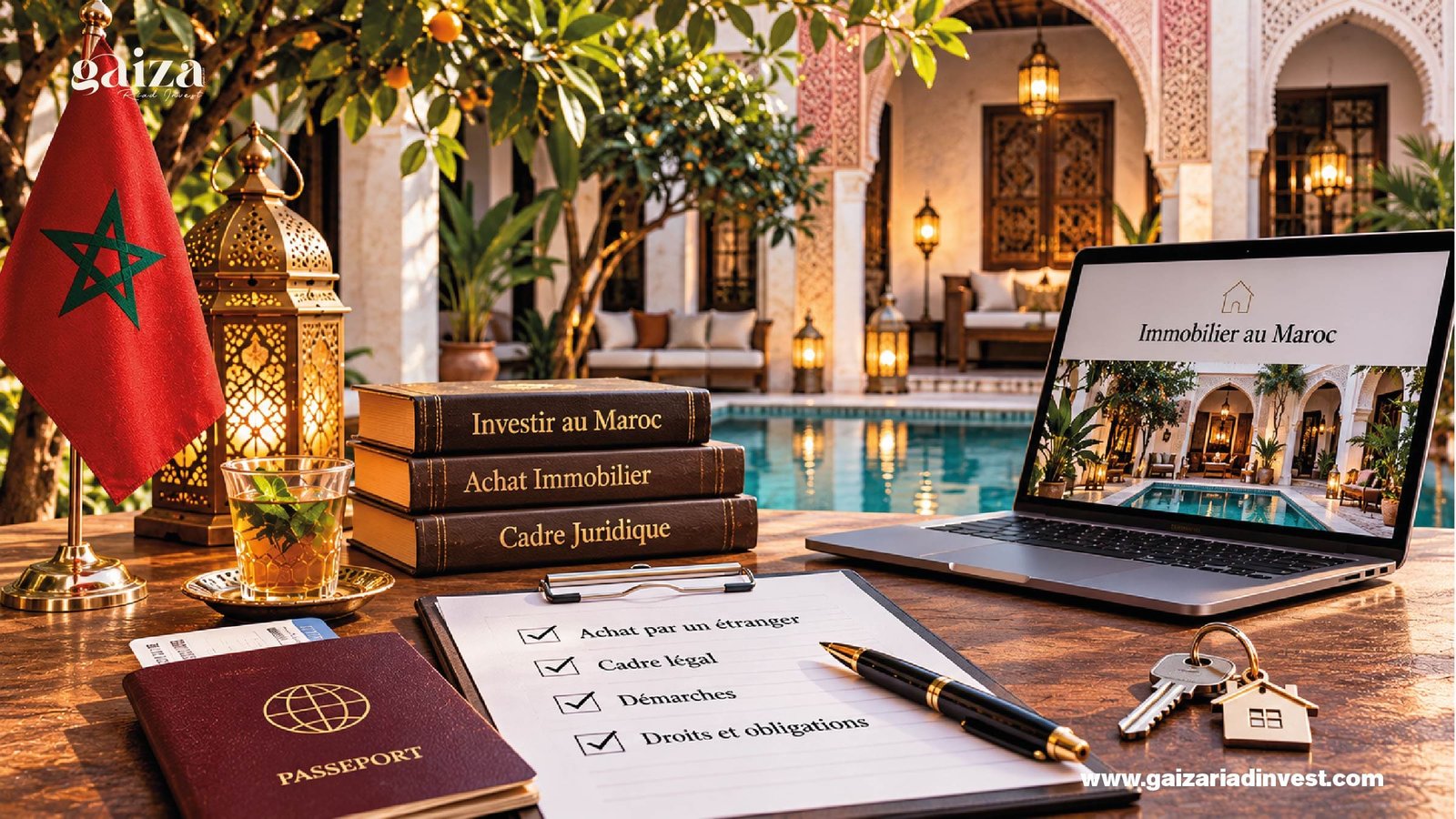
It is often the first question of an investor discovering Morocco: is a foreigner allowed to buy property there? The answer is yes, in the vast majority of cases, and on terms close to those of a Moroccan buyer. But a few rules are worth knowing before starting a search.
The principle: full ownership
A foreigner, resident or not, can acquire in Morocco an apartment, a villa, a riad or a plot of land located in an urban area, in full ownership. No special authorisation or Moroccan partner is needed. They then have the same rights as any owner: occupy the property, let it, pass it on or resell it.
The exception: agricultural land
The only significant restriction concerns agricultural land outside urban perimeters: it cannot be acquired by a foreign individual. For a non-agricultural project on this type of land, a certificate of non-agricultural designation must be obtained before the acquisition. Certain special regimes, such as collective land or habous property, are moreover subject to their own rules and are not freely transferable.
The decisive question: the property’s land status
More than the buyer’s nationality, it is the legal situation of the property that determines the security of the transaction.
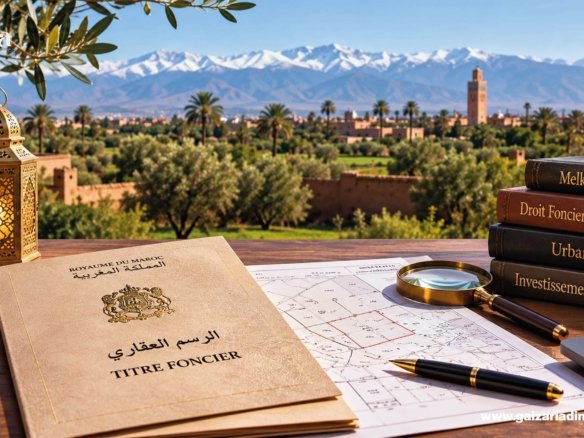
- A titled property has a land title, final and unassailable, registered with the Land Registry. This is the safest situation.
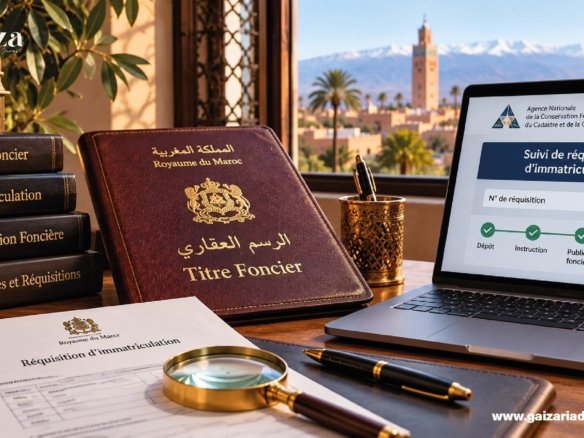
- A property undergoing registration has a registration application number: the procedure is under way, but oppositions remain possible until it is completed.
- An unregistered property, common in the medinas, often rests on an adoulaire deed (melkia). Its acquisition is possible, but requires reinforced legal support.
In the medinas, joint ownership must also be taken into account: when several heirs are owners, all must consent to the sale, and a right of pre-emption may be exercised in favour of the co-owners.
Who draws up the deed?
In Morocco, the sale of real estate must be recorded in an authentic deed, drawn up by a notary or by a lawyer accredited before the Court of Cassation (adouls also act for certain deeds). For a foreign buyer, the notary is the natural contact: they check the situation of the property, hold the funds within the framework provided by law and register the sale on the land title.
And the purchase money?
A point often underestimated: how the funds reach Morocco. When the acquisition is financed in foreign currency, by bank transfer, the investor keeps the right to later transfer back the proceeds of resale, capital gain included, after payment of taxes. It is therefore essential to keep all bank certificates from day one.
In summary
- A foreigner can buy in Morocco in full ownership, without special authorisation.
- Agricultural land outside urban perimeters is an exception.
- The land status of the property matters more than the buyer’s nationality.
- Financing in foreign currency, through the banking system, protects the right to repatriation.
“Buying in Morocco is simple for a foreigner; buying well takes method.”
The Gaiza Riad Invest vision
Buying in Morocco is simple for a foreigner; buying well takes method. At Gaiza Riad Invest, we always start by verifying what is being bought before talking about what one loves.
Frequently asked questions
In a few questions
Can a foreigner buy property in Morocco?
Yes. A foreigner, resident or not, can acquire an apartment, a villa, a riad or a plot of land located in an urban area, in full ownership, without special authorisation or a Moroccan partner.
Are there exceptions?
Agricultural land outside urban perimeters cannot be acquired by a foreign individual. Collective land and habous property are moreover subject to their own rules.
Who draws up the deed of sale?
A notary or a lawyer accredited before the Court of Cassation; adouls also act for certain deeds. For a foreign buyer, the notary is the natural contact.
Can the proceeds of resale be repatriated?
When the acquisition is financed in foreign currency, by bank transfer, the investor keeps the right to transfer back the proceeds of resale, capital gain included, after payment of taxes.
Sources : dahir du 12 août 1913 modifié par la loi 14-07 ; loi 39-08 portant code des droits réels ; Office des Changes, Instruction générale des opérations de change. Ces informations sont générales et à jour à la date de publication ; elles ne constituent pas un conseil juridique personnalisé.
La Maison GAIZA
Let’s talk about your project
Buy, sell or invest in Morocco: an adviser will answer you personally.
Contact usTake action
Preparing a purchase in Morocco? Discover the properties we present, after verification of their legal situation.
Riads and medina residencesHospitality outside the medina