
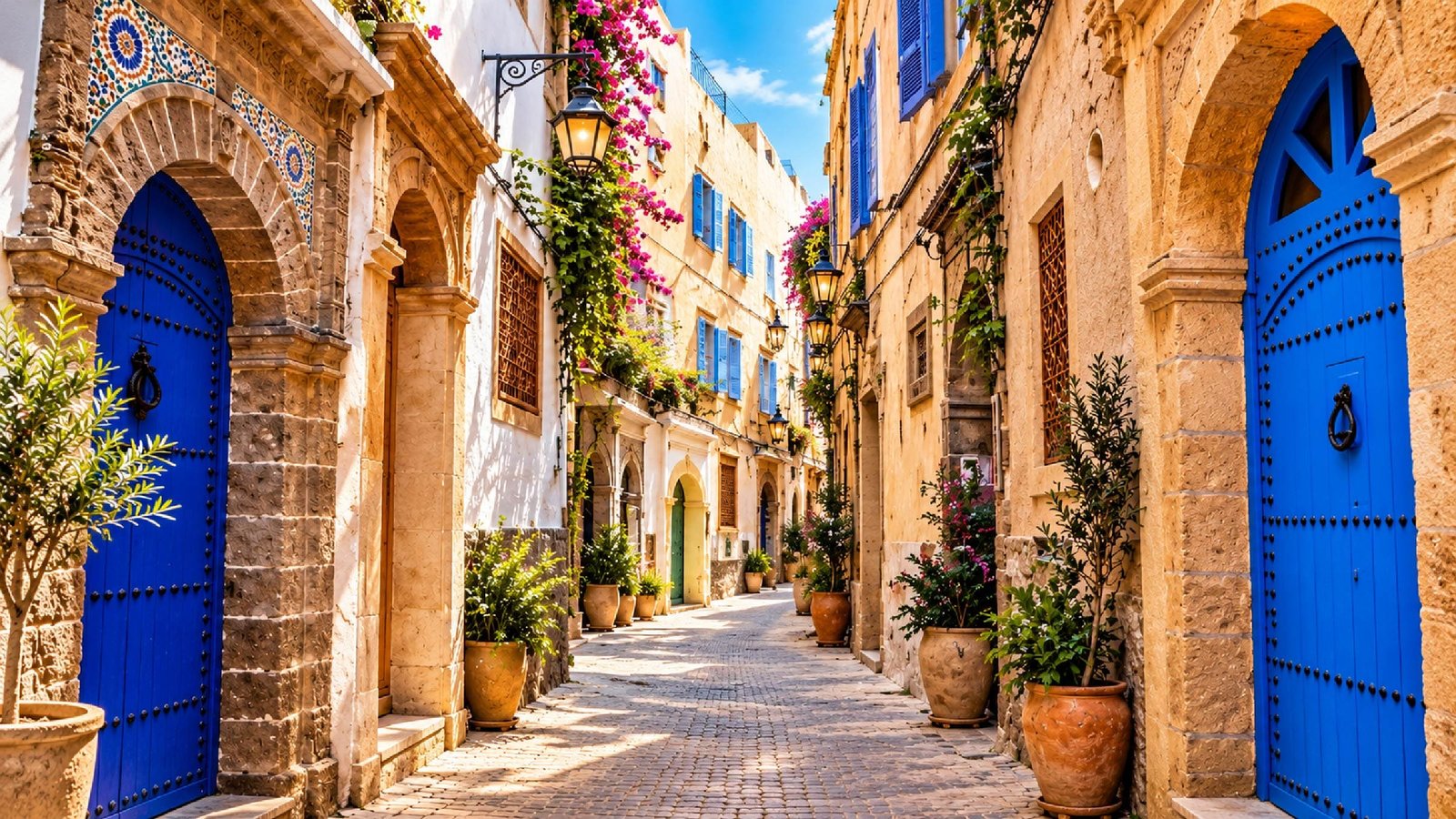
Atlantic ramparts, white and blue lanes, a unique light: Essaouira has long appealed to those seeking a riad to live in or to bring to life. Before committing, however, three things must be understood: what gives the medina its value, what the law regulates, and what to verify before signing.
Why Essaouira attracts investors
The medina of Essaouira has been a UNESCO World Heritage site since 2001, under criteria (ii) and (iv) (World Heritage Committee decision). This listing protects the character of the town, but it also regulates works, as we shall see below.
La fréquentation progresse. Selon l’Observatoire du tourisme, les établissements classés d’Essaouira ont enregistré plus de 1,249 million de nuitées en 2025, soit +7% sur un an, avec une croissance portée par la clientèle internationale (AllAfrica, 26 February 2026). À fin mai 2026, ils comptaient près de 506 000 nuitées, +6% par rapport à 2025. Ces statistiques ne couvrent que les hébergements classés : le conseil provincial du tourisme a indiqué en janvier 2025 qu’Essaouira avait dépassé le million de touristes en 2024, toutes formes d’hébergement confondues (Médias24).
Local officials speak of the ambition to double, or even triple, arrivals by 2030, with nearly 4,000 additional beds. This is an announced target, not a guaranteed forecast.
“In Essaouira, a riad is chosen first for its legal situation and its access. The charm comes afterwards.”
Getting there and living there
Essaouira is about 175 to 190 km from Marrakech, roughly 2.5 to 3 hours by road depending on the route. Essaouira-Mogador airport is about fifteen kilometres from the town and mainly receives low-cost European flights, according to the travel guides consulted; services are seasonal, so check the current timetables.
For a riad, access matters as much as the address: a narrow lane, a door far from a drop-off point or difficult carrying weigh on occupants’ comfort, on the cost of works and on resale.
What to check before buying
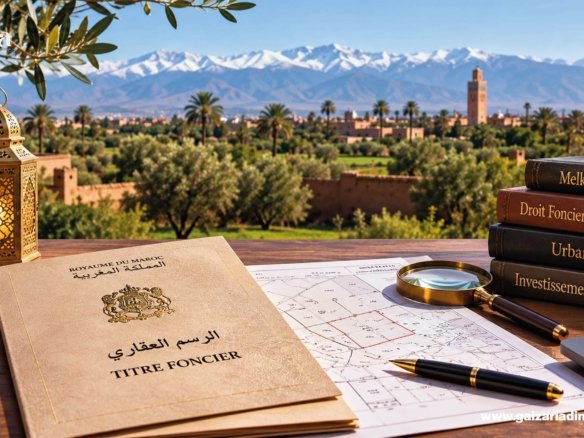
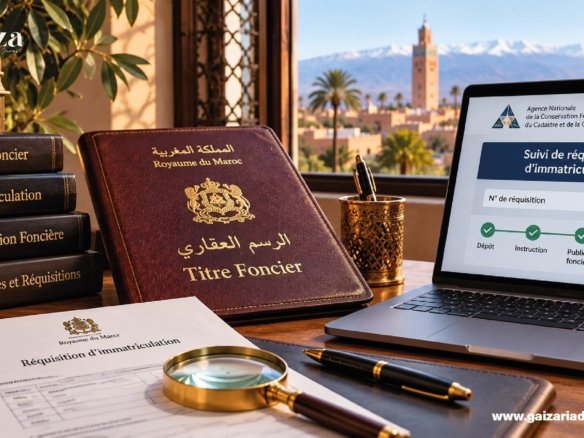
1. Land status. A titled (registered) property offers a security that a traditional deed does not give. Our guide explains the difference between a registration application number and a land title and what a melkia means.
2. Works in a classified medina. The UNESCO nomination file mentions an old text, Law No. 22-80, which places under control any demolition, alteration, extension or reconstruction of buildings. We did not find a current authorisation procedure specific to riads: it must be confirmed with the commune and the urban agency before any renovation project.
3. Intended use. Living in the riad is one thing, operating it as a guesthouse is another. Law 80-14 on tourist accommodation establishments defines the riad and the guesthouse and provides that the operating licence is granted only after classification (text of the law, Ministry of Justice). A 2023 decree (No. 2.23.441) and five orders published in 2025 clarified control and star classification, including for riads and guesthouses. The exact conditions are to be verified in the texts published in the Official Bulletin.
4. The notary. They secure the sale and check the documents. Read the notary’s role in Morocco.
How much to budget?
We found no reliable price per square metre for riads in the Essaouira medina: listings show very different prices depending on condition, title and location. By way of illustration, listings consulted in November 2026 offer a titled riad of 126 m² on the ground (260 m² of living space, 7 bedrooms, to renovate) at €430,000, and a 170 m² medina house at MAD 2.3 million. These are asking prices, not sale prices.
To value a property, seek the opinion of a notary, a local agency and, if possible, compare with actually recorded sales. Also plan the works budget: in the medina, it depends on authorisations and the craftsmen available.
Mistakes to avoid
- buying on the charm of a visit alone, without checking the land status;
- starting works without the commune’s authorisation;
- counting on guesthouse operation without knowing the classification conditions;
- neglecting access and the logistics of the district.
Gaiza Riad Invest’s position
At Gaiza Riad Invest, we present medina riads after verifying their situation and access. Discover our selection in Essaouira and the riads and medina residences that we present.
Frequently asked questions
In a few questions
Is the Essaouira medina protected?
Yes, it has been a UNESCO World Heritage site since 2001. This protection regulates works: check with the commune before any renovation.
Can a riad be converted into a guesthouse?
Yes, but operation falls under Law 80-14: the operating licence is granted only after the establishment has been classified. The precise conditions are to be confirmed in the texts in force.
What is the main pitfall to avoid?
Buying without verifying the land status, then discovering a blockage at the time of works or resale. A notary must check the documents before signing.
Is Essaouira well served?
The town is about 2.5 to 3 hours by road from Marrakech, and its airport mainly receives low-cost European flights, with seasonal services.
Can a foreigner buy in Essaouira?
The general rules applicable to foreigners are detailed in our article on buying property in Morocco as a foreigner.
This information is general; it does not constitute personalised legal advice.
Gaiza Riad Invest — Investing in beauty, understanding heritage.
La Maison GAIZA
Let’s talk about your project
Buy, sell or invest in Morocco: an adviser will answer you personally.
Contact usTake action
Preparing a purchase in Morocco? Discover the properties we present, after verification of their legal situation.
Riads and medina residencesHospitality outside the medinaSources : UNESCO, Médina d’Essaouira (ancienne Mogador), inscrite en 2001 ; loi 80-14 ; Observatoire du tourisme. Ces informations sont générales et à jour à la date de publication ; elles ne constituent pas un conseil juridique, fiscal ou financier personnalisé.