
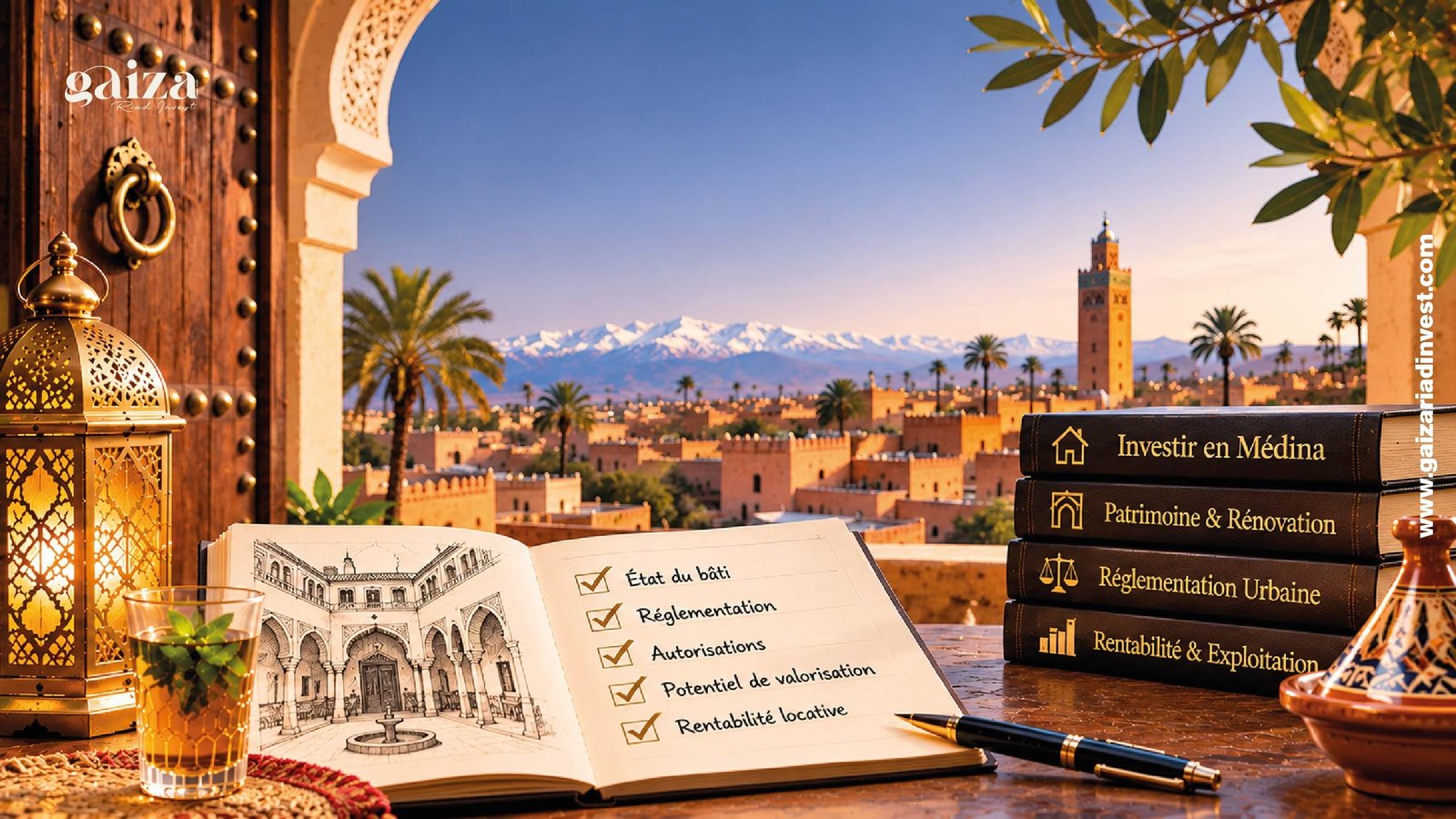
Investing in a Moroccan medina is not buying property like any other.
Behind an old door, a riad or a traditional house, there is a particular environment: a history, an architecture, an urban fabric, uses, constraints and sometimes a complex land situation.
Before looking for a property, comparing prices or talking about profitability, you must first learn to read the medina.
1. The medina is a property market apart
A medina is not a conventional residential district.
Its organisation was built up gradually around the souks, historic gates, mosques, squares, lanes and old residences.
Two properties a few hundred metres apart can therefore have very different values.
Location is not measured only in square metres.
You need to understand:
- access to the property;
- proximity to the main points of interest;
- vehicle accessibility;
- the width and layout of the derbs;
- the immediate environment;
- the architectural quality of the area;
- and the district’s potential for change.
In a medina, a few metres can sometimes change a property’s value considerably.
2. Not all medina properties are alike
The word “riad” is often used to describe many different properties.
Yet an investor must learn to distinguish the different types:
Riad, dar, traditional house, fondouk, patio house or historic residence can have very different characteristics.
Surface area is only a first indicator.
The interior layout, ceiling height, the presence of a patio, the structure, the decorative elements, the light, the access and the possibility of transformation can have a major influence on the real value of the property.
3. Location is read differently in a medina
In conventional real estate, one often reasons by street, district, proximity to transport or view.
In a medina, the reading is finer.
You should notably look at:
The access door.
The derb.
The walking distance.
The accessibility.
The immediate environment.
The proximity to souks and monuments.
The calm or activity of the area.
A perfectly renovated but hard-to-reach property can sometimes be less interesting than a less spectacular one with a strategic location.
4. Land status is an essential question
It is probably one of the first subjects an investor must understand before buying.
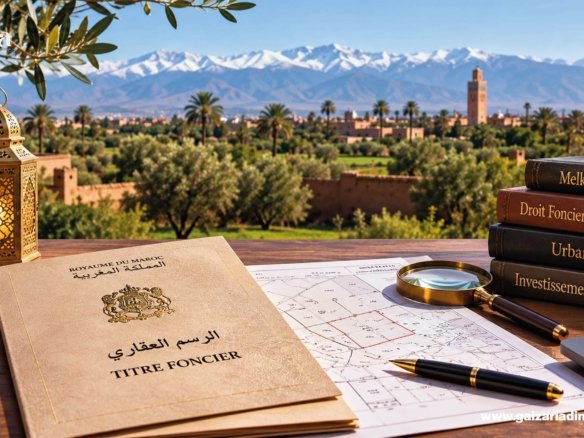
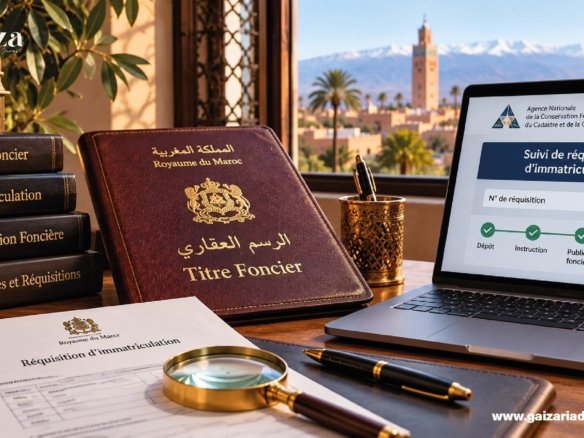
In the medinas, one may encounter different land situations: land title, melkia, joint ownership, registration application or other particular situations.
The nature of the land document is not a mere administrative detail.
It can have consequences for:
- the security of the acquisition;
- passing on the property;
- the possibility of financing;
- resale;
- carrying out certain works;
- and the future enhancement of the asset.
An investor must therefore never assess only the beauty of a property. They must also understand what they are buying in legal terms.
5. Renovating in a medina calls for a particular approach
Renovating an old house in a medina is not comparable to renovating a contemporary apartment.
The building may require different skills: traditional masonry, tadelakt, zellige, carved wood, worked plaster or restoration of old elements.
The existing structure must also be taken into account and, depending on the area and the nature of the building, the applicable rules and authorisations.
A successful renovation is therefore not simply about making a property “more beautiful”.
It consists in intelligently transforming an existing heritage asset without losing what makes it valuable.
6. A property’s value is not limited to its purchase price
A property may seem attractive because its acquisition price is lower than that of a comparable property.
But the true cost of an investment also includes:
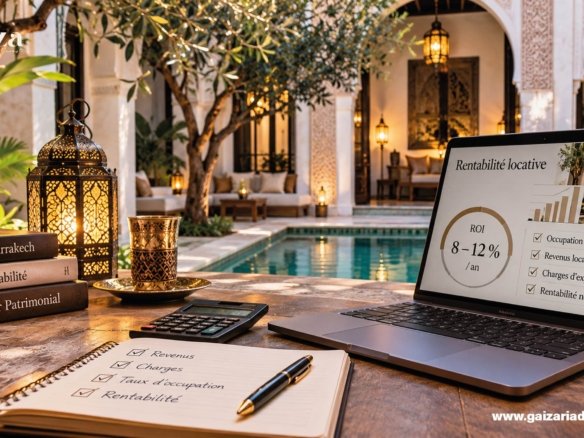
the purchase price + fees + works + delays + technical constraints + legal risks + operating costs.
That is why two properties with a similar price per square metre can have completely different investment profiles.
The investor must therefore reason in terms of the overall value of the project, not only the acquisition price.
7. Understanding the medina before choosing your investment
Before looking for a riad in Marrakech, Fez, Essaouira or another Moroccan medina, it is useful to answer a few essential questions:
Where to invest?
What type of property to look for?
What level of works to accept?
Which land situation to favour?
What use to envisage for the property?
What real budget to plan after acquisition?
What enhancement strategy to envisage in the medium and long term?
These answers allow you to move from a simple property search to a genuine heritage investment strategy.
“In a medina, a few metres can sometimes change a property’s value considerably.”
The Gaiza Riad Invest vision
At Gaiza Riad Invest, we believe a heritage investment begins with understanding.
Before presenting a property, we seek to understand its location, its history, its structure, its land situation, its potential and the constraints that may accompany the project.
Because a riad can be magnificent.
But a heritage investment must be beautiful, coherent, controlled and lasting.
Understanding the medina is the first step towards knowing where and how to invest.
Are you considering investing in a medina in Morocco?
Start by understanding the market before choosing the property.
Gaiza Riad Invest supports investors in their thinking, search and heritage property acquisition in Morocco.
Invest with discernment. Preserve heritage. Build for the long term.
Frequently asked questions
In a few questions
Why is the medina a market apart?
Its organisation was built around the souks, gates, squares and old residences: two properties a few hundred metres apart can have very different values.
What land situations may one encounter?
Land title, melkia, joint ownership, registration application or other particular situations, with consequences for security, financing, resale and succession.
How to assess the real cost of an investment?
By reasoning in overall value: purchase price, fees, works, delays, technical constraints, legal risks and operating costs.
La Maison GAIZA
Let’s talk about your project
Buy, sell or invest in Morocco: an adviser will answer you personally.
Contact usTake action
Preparing a purchase in Morocco? Discover the properties we present, after verification of their legal situation.
Riads and medina residencesHospitality outside the medina